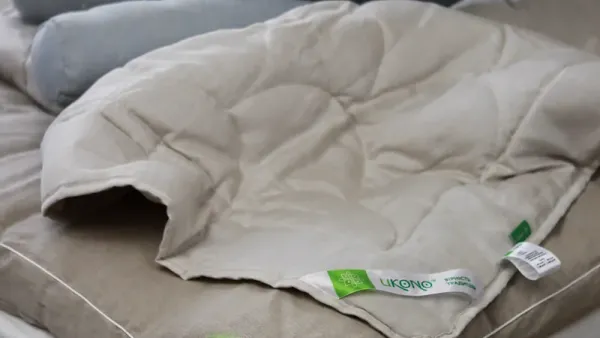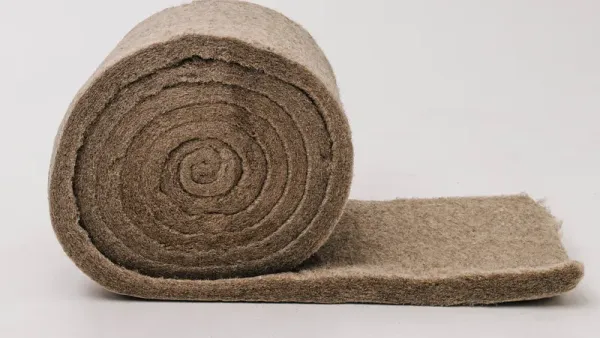
Demand for sustainable sleep systems, breathable home textiles, and natural upholstery fillings continues to accelerate across Ukraine and the European Union. Mattress, bedding, and furniture producers are actively seeking plant-based alternatives that breathe, regulate humidity, and hold their structure for years. Hemp-pon (Konoplepon) — a thermobonded non-woven filler built on industrial hemp fiber — has emerged as one of the most capable materials in this category.
At LLC Sumykamvol, Konoplepon is manufactured in-house from raw Ukrainian bast fiber all the way to calibrated 2.20 m industrial rolls. In this guide, we examine how hemp-pon is engineered without adhesive resins, how it stacks up against polyester synthepon, cotton, and coconut coir, and which density best fits mattresses, blankets, pillows, and upholstered furniture.
What Is Hemp-pon and How Is It Manufactured?
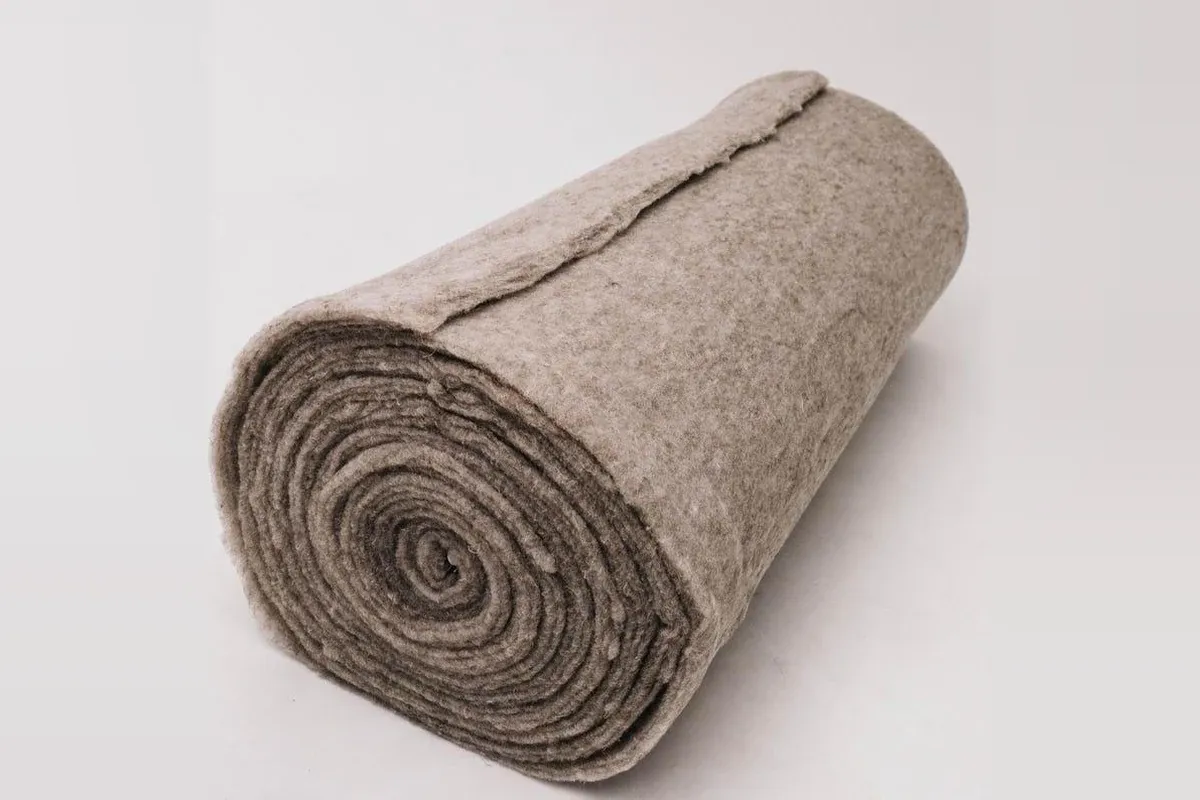
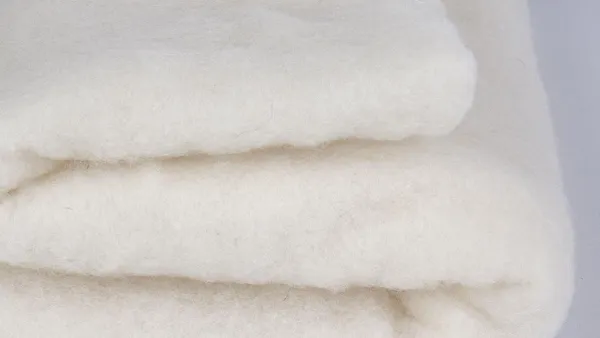
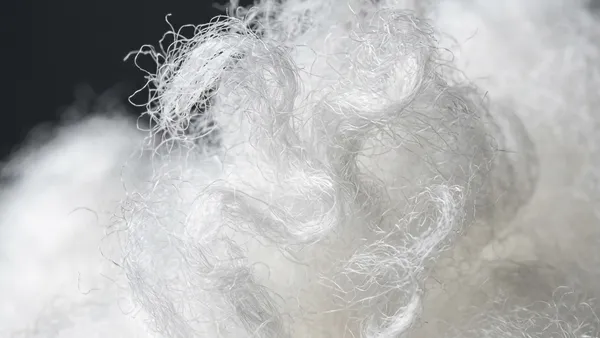
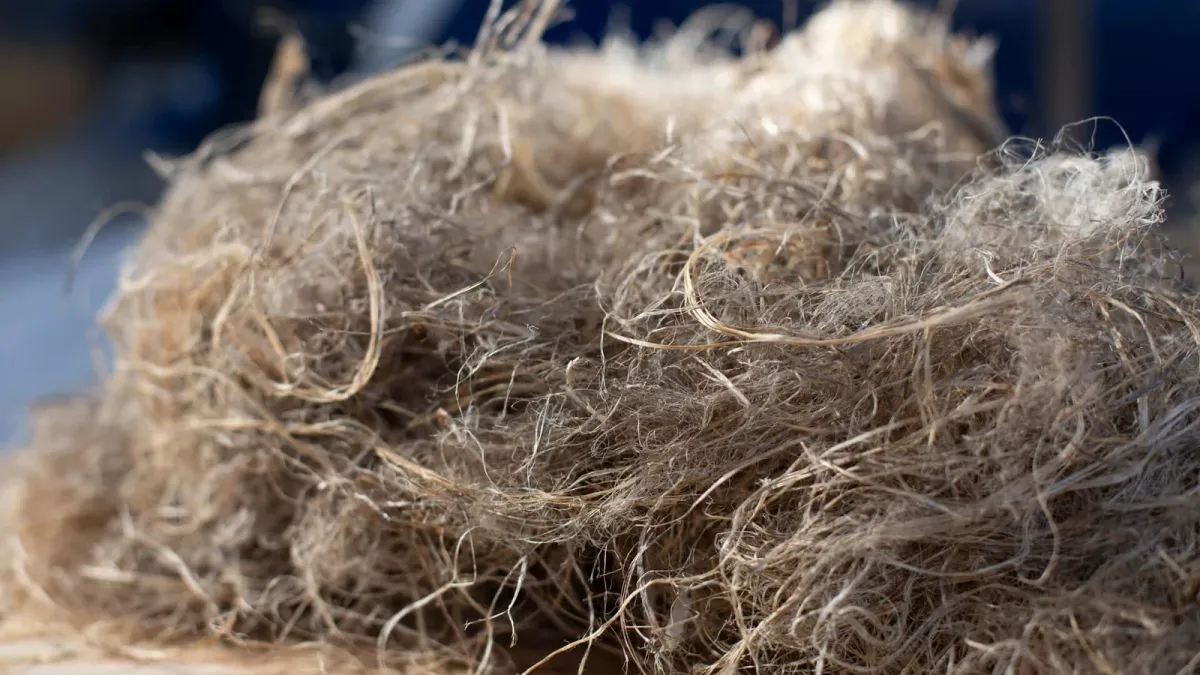
Hemp-pon is a voluminous non-woven batting composed of 60% natural industrial hemp fiber combined with 40% polyester thermobonding fiber. Unlike purely synthetic fillings, natural plant fiber drives the core performance here: hemp’s porous bast structure promotes continuous airflow, absorbs and releases moisture effortlessly, and naturally prevents static electricity buildup.
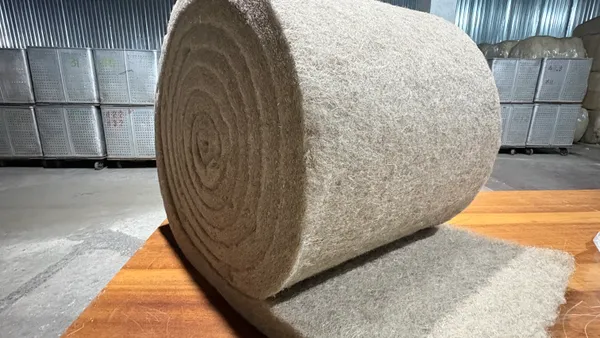
Production at LLC Sumykamvol completely avoids liquid adhesives, formaldehyde binders, and harsh chemical bleaching. First, raw hemp fibers undergo thorough mechanical cleaning and preparation, then carding lines form a uniform multi-layered fibrous web. Next, the web passes through a controlled thermal-bonding oven where specialized bicomponent bonding fibers fuse the structure cleanly — locking in loft, resilience, and dimensional stability.
Because no harsh chemical treatments are used, finished hemp-pon retains its natural warm beige-grey tone, faint herbal aroma, and hemp’s innate antiseptic properties. In the final stage, the batting is calibrated to client-specified densities (100 to 500 g/m²) and wound into 15–50 linear meter rolls ready for automated cutting, quilting, or mattress assembly.
Why Hemp Fiber Outperforms in Bedding and Mattresses
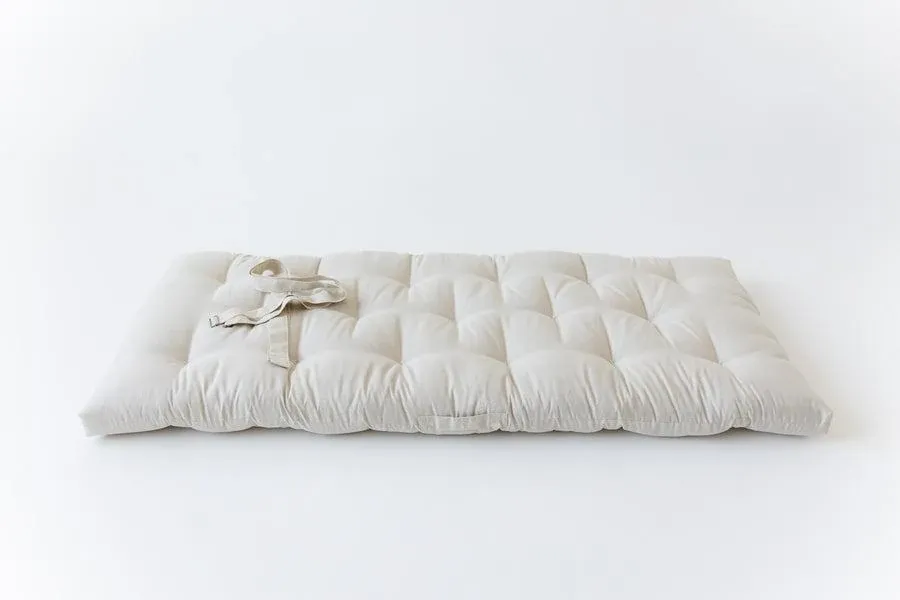
The defining benefit of hemp-pon in sleep products is year-round thermoregulation and breathability. The hollow, porous geometry of industrial hemp fibers allows air to circulate continuously inside quilts, pillows, and mattress layers. In warm weather it dissipates excess body heat instead of trapping humidity, while in cooler months it preserves comfortable warmth without feeling heavy or stifling.
Equally compelling is natural sleep hygiene. Industrial hemp is cultivated without pesticides, and hemp fibers naturally resist dust mites, mold, and bacterial odor buildup. Because hemp-pon absorbs moisture vapor quickly and releases it just as fast — while generating zero static charge — it stays fresher longer and attracts far less airborne household dust than standard synthetic fillers.
For mattress and upholstery engineers, tensile strength and long-term resilience seal the case. Hemp ranks among the strongest natural plant fibers on earth: it resists pulverizing, flattening, and fiber breakdown under repeated compression. That is why mattress toppers, pillows, and hemp bedding for healthy sleep maintain even loft and supportive comfort year after year.
Hemp-pon brings together two qualities that rarely coexist: clean, glue-free Ukrainian plant fiber and the industrial elasticity required by modern mattress, bedding, and furniture factories.
— Andriy Karpychev, Commercial Director at Sumykamvol
Density Selection Guide: Matching Hemp-pon to Your Product Line
Because every textile application requires a distinct balance of drape, loft, and firmness, Sumykamvol manufactures hemp-pon across three primary density tiers:
| Material Density | Structural Characteristics | Optimal Applications |
|---|---|---|
| 100–150 g/m² | Lightweight, supple, easy to quilt | Summer and mid-season blankets, quilted mattress protectors, baby sleeping envelopes and crib bumpers |
| 200–300 g/m² | Lofty, warm, resilient recovery | All-season and winter duvets, natural hemp pillows, breathable insulation for outerwear and sportswear |
| 350–500 g/m² | Dense, shape-stable, supportive | Orthopedic and children’s mattresses, futons and toppers, natural padding layers for sofas and armchairs |
Hemp-pon is also widely adopted in children’s bedding and pet beds, where a breathable, glue-free, anti-static natural core is a major selling point (keeping in mind that final product safety always depends on all components meeting applicable regulatory standards).
Hemp-pon vs. Synthepon, Cotton, and Coconut Coir
Procurement teams frequently compare hemp-pon against conventional industry fillers before updating their material specs:
- vs. Polyester Synthepon. Classic synthepon offers the lowest unit price, but lags behind in airflow, moisture management, and anti-static comfort. Hemp-pon helps brands step up into mid-tier and eco-premium segments backed by tangible natural performance.
- vs. Cotton Batting. Hemp fiber is stronger than cotton, releases absorbed moisture faster, resists matting over time, and requires far less water and agricultural input to grow.
- vs. Latexed Coconut Coir (in Mattresses). Coconut coir can dry out, crumble over time, and carry a distinct latex odor. High-density hemp-pon (350–500 g/m²) stays cohesive without synthetic latex, never crumbles, and delivers springy, breathable orthopedic support.
Care, Longevity & Sustainability Credentials
Finished home textiles with hemp-pon filler are straightforward to maintain: quilts and protectors tolerate gentle low-temperature washing, dry efficiently, and bounce back in loft. For consumer-facing maintenance instructions, see our dedicated guide on How to Wash a Hemp-Filled Quilt.
Just as importantly, industrial hemp is a fast-growing regenerative crop that improves soil health without chemical pesticides. By converting local agricultural fiber into precision-bonded non-woven rolls, Sumykamvol enables Ukrainian and European brands to lower their environmental footprint with transparent, traceable raw materials.
Order Wholesale Hemp-pon Directly from Sumykamvol
LLC Sumykamvol supplies hemp-pon directly from our Ukrainian manufacturing facility in 2.20 m roll width, 100–500 g/m² densities, and 15–50 linear meter rolls, with custom density and thickness calibration available for B2B partners.
Explore technical specifications on our Konoplepon product page, browse the full Non-woven Materials catalog, or request material samples and wholesale pricing on our Cooperation page.