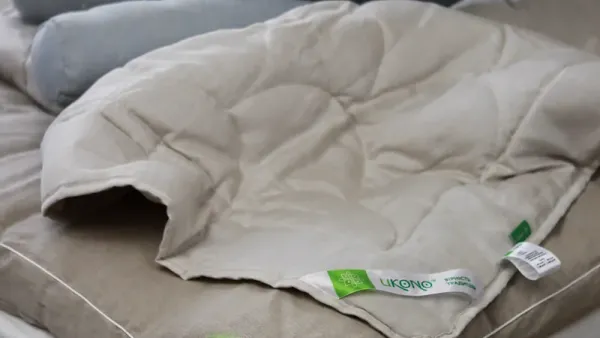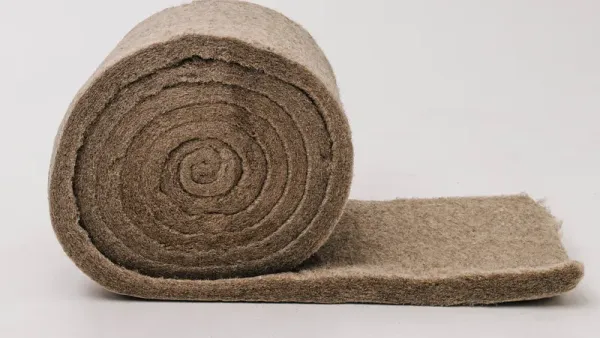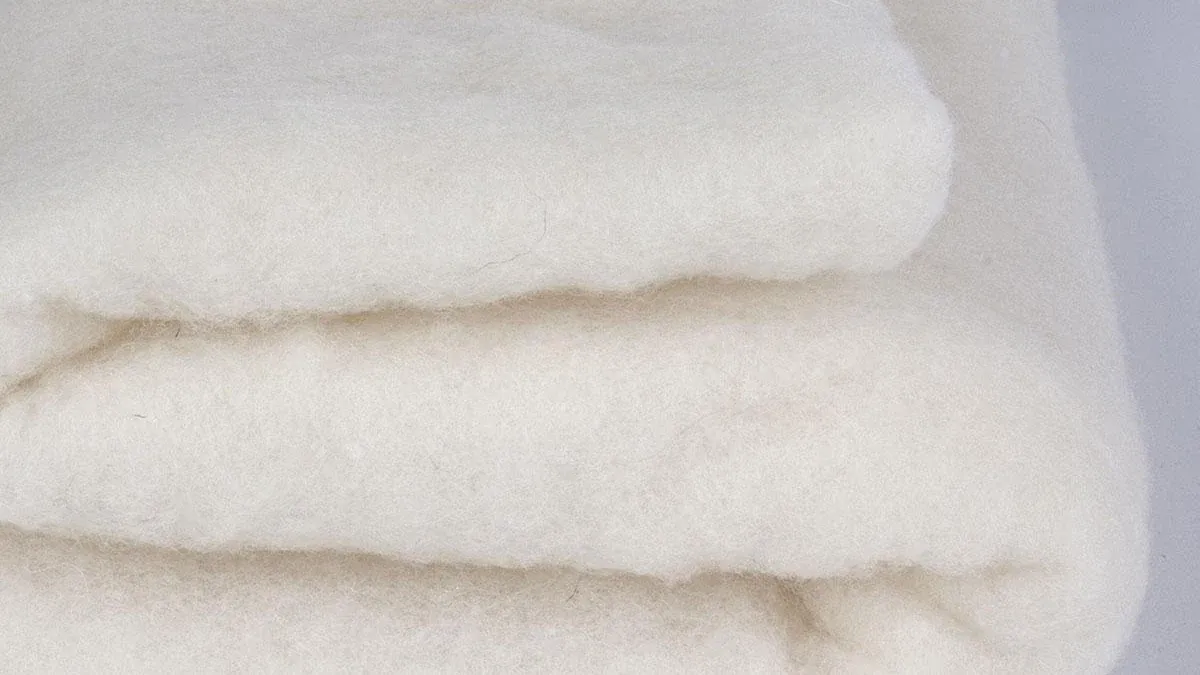
Apparel, bedding, and mattress manufacturers increasingly look for an insulating filler that delivers the natural “dry warmth” of real sheep wool without clumping after its first season or slowing down industrial sewing lines. Wool-pon (Sherstepon) was engineered specifically to solve that challenge — uniting natural wool fibers with the dimensional stability of modern thermobonded non-woven batting.
Unlike loose carded wool or traditional wool batting, Sherstepon manufactured by LLC Sumykamvol retains loft, handles cleanly during cutting and quilting, and maintains even insulation across the entire roll. Below, we cover its exact composition, density-to-temperature selection chart, how it compares with polyester synthepon and 100% wool batting, plus practical tips for garment manufacturing and care.
What Is Wool-pon: Composition & Production Technology
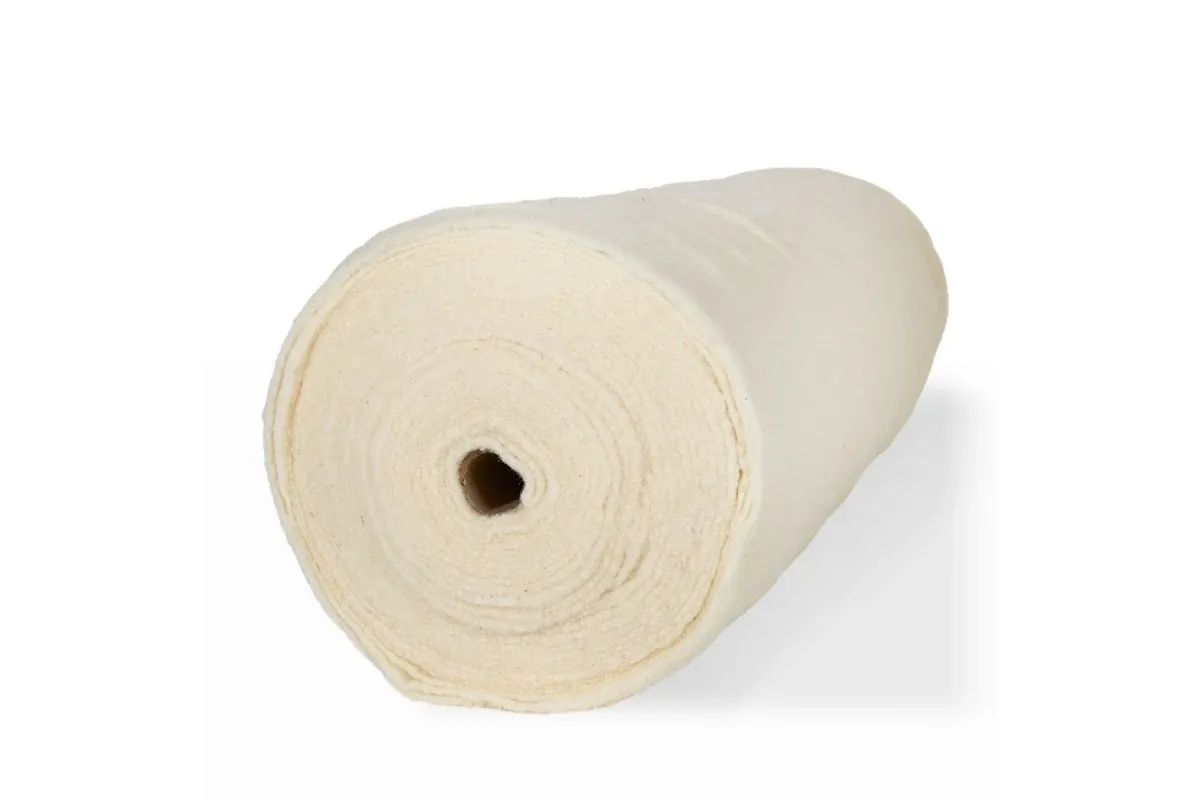
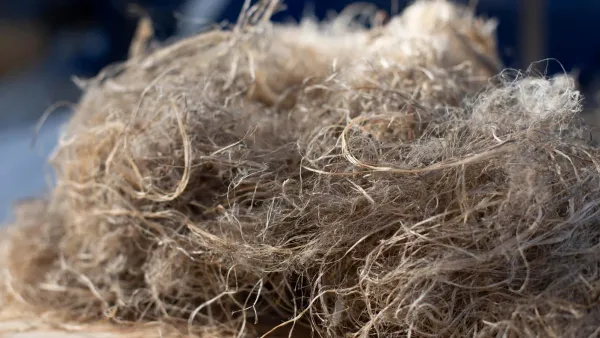
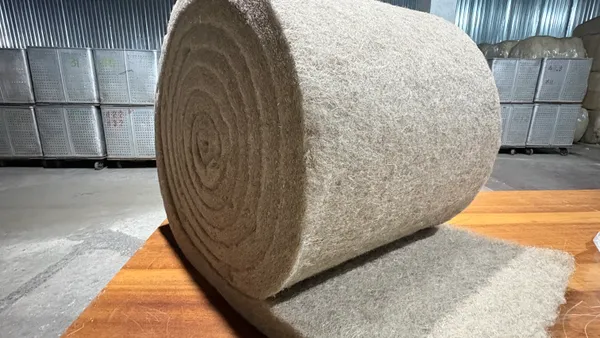
Wool-pon is a voluminous thermobonded non-woven web made from 60% natural sheep wool and 40% polyester thermobonding fibers. That ratio is deliberate: while 100% pure wool excels at retaining heat, moisture, friction, and laundering tend to make unbonded wool felt, shrink, or shift inside quilts and coats. Adding a fine polyester bonding matrix locks the wool fibers in place, provides rapid recovery after compression, and ensures consistent thickness across every linear meter.
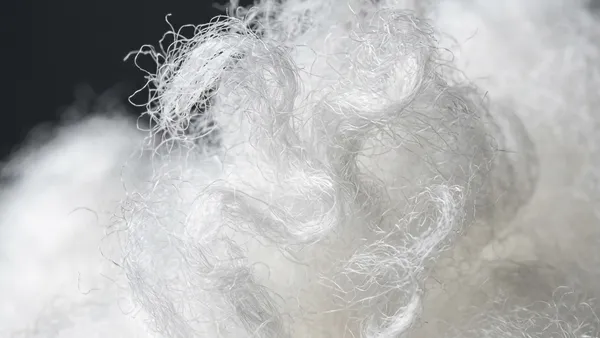
At the Sumykamvol factory, thoroughly washed and cleaned sheep wool is blended with bicomponent polyester fibers, carded into a multi-layered lofty web, and passed through a precision thermal-bonding chamber. Under controlled heat, the low-melt fiber component fuses the web together without liquid glues, resins, or harsh chemical binders. The result is a supple, resilient, low-odor insulating sheet suited to both high-speed industrial quilting and tailored outerwear.
Because natural wool makes up the majority of the web, the finished material retains wool’s signature natural crimp. Millions of microscopic air pockets trapped between crimped fibers act like a breathable thermal barrier — holding body warmth in freezing weather while allowing excess heat and vapor to escape naturally.
Why Manufacturers Choose Wool-pon: Key Advantages
The defining advantage of natural wool insulation is “dry warmth.” Sheep wool is naturally hygroscopic: it can absorb up to 25–30% of its own weight in moisture vapor and release it gradually into the air while remaining dry and warm to the touch. In winter coats or heavy duvets, wearers stay comfortable when moving between cold outdoor air and heated indoor spaces — avoiding the clammy overheating typical of purely synthetic insulation.
For sewing factories and bedding producers, process reliability matters just as much. Unlike loose natural batts that snag or thin out at the edges, thermobonded wool-pon holds clean cut lines on automated cutting tables, resists delamination, and stays evenly distributed inside quilted channels. That lowers rejection rates and speeds up serial production of coats, parkas, winter blankets, and sleeping bags.
Equally important is brand positioning and consumer demand. Buyers across Ukraine and European markets actively check care labels and prefer textiles with verified natural-fiber content. Using wool-pon elevates the perceived quality of finished garments and home textiles while keeping unit costs far more competitive than imported specialty microfibers.
Wool-pon gives textile manufacturers the ideal balance: the natural warmth and moisture-regulating microclimate of real sheep wool paired with the clean cutting, resilience, and durability of a thermobonded non-woven web.
— Andriy Karpychev, Commercial Director at Sumykamvol
Temperature Guide: Choosing the Right Wool-pon Density
One of the first questions garment technologists and buyers ask is which wool-pon density (150, 200, or 300 g/m²) matches their target climate. Density determines both warmth and garment drape, so selecting the right weight depends on the season, outer shell fabric, and end product:
| Material Density | Approximate Comfort Range (Apparel) | Recommended Applications |
|---|---|---|
| 150 g/m² | +5°C to −5°C | Mid-season tailored coats and jackets, quilted vests, lightweight all-season duvets, bedspreads |
| 200 g/m² | −5°C to −15°C | Classic winter coats and parkas, warm all-season and winter quilts, children’s outerwear |
| 300 g/m² | −15°C to −25°C | Cold-weather winter jackets, premium heavy winter blankets, extreme-cold sleeping bags |
| 400–500 g/m² | High-density structural layer | Orthopedic mattresses, dual-season (“winter–summer”) mattress comfort layers, furniture padding |
For structured outerwear, always consider the wind resistance of the shell fabric: paired with dense wool suiting or a windproof membrane, 150–200 g/m² wool-pon delivers dependable warmth while preserving a refined, low-bulk silhouette.
Wool-pon vs. Synthepon & 100% Wool Batting: What Is the Difference?
Before committing to a raw material, production managers typically weigh wool-pon against standard synthepon or pure wool batting:
- Wool-pon vs. Synthepon. At equal weight, wool-pon feels warmer and markedly more breathable thanks to wool’s natural moisture-buffering properties, reducing clamminess during active wear or sleep. Pure polyester synthepon wins on entry-level price and fastest drying time, making it ideal for budget or utility lines, whereas wool-pon excels in winter coats, warm blankets, and natural-focused collections.
- Wool-pon vs. 100% Wool Batting. Unbonded pure wool batting is prone to felting, shrinkage, and fiber migration after repeated washing or heavy wear. The 40% thermobonded polyester framework inside wool-pon prevents clumping and keeps the insulating layer uniform for years.
Practical Sewing & Care Tips for Finished Products
To get the longest service life and cleanest finish out of wool-pon textiles, follow a few proven production and care practices:
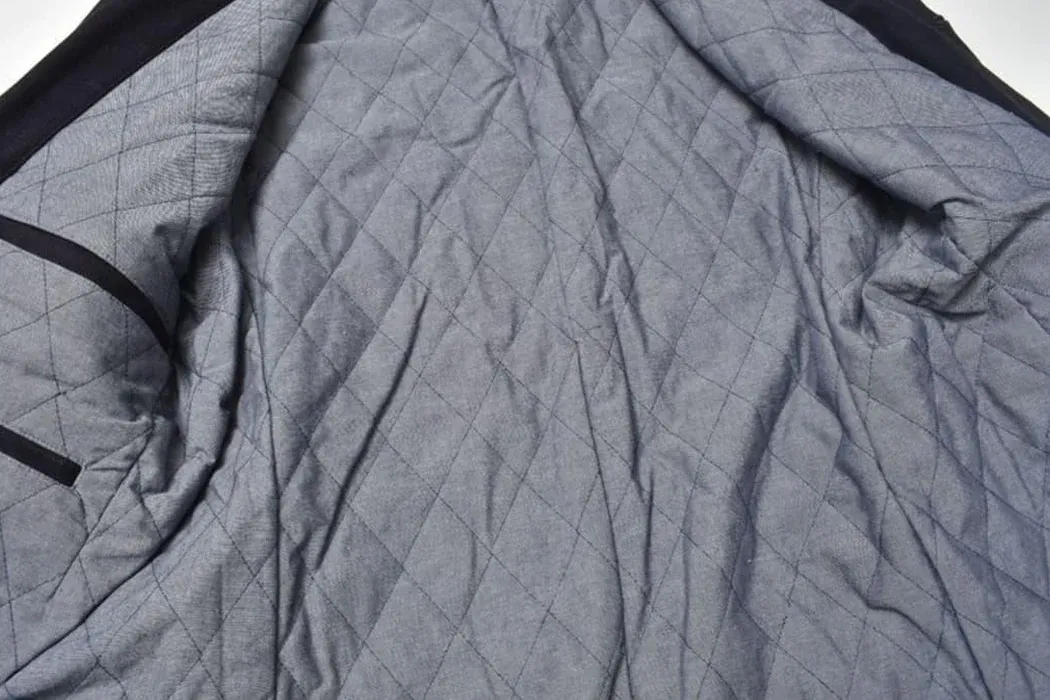
- Quilting and Lining Selection. In coats and jackets, quilt wool-pon together with a breathable lining such as viscose twill or tightly woven cotton. Even quilting prevents individual wool fibers from migrating through seams while preserving soft drape.
- Clean Seam Construction. Grade and trim excess insulation inside seam allowances at shoulders, armholes, and lapels to avoid bulk and keep tailored lines sharp.
- Washing and Maintenance. Quilts and washable outerwear containing wool-pon should be washed on a gentle/wool cycle at up to 30°C with liquid wool detergent, spun gently (400–600 rpm), and dried flat away from direct heat. Structured wool coats lined with wool-pon should be professionally dry-cleaned according to the outer shell care label.
Wholesale Wool-pon Directly from Manufacturer Sumykamvol
With over 35 years of industrial expertise in wool processing and non-woven production, LLC Sumykamvol supplies reliable B2B batches directly from our Ukrainian facility — with densities from 150 to 500 g/m² and industrial roll widths up to 2.2 m.
Review full technical specifications on our Sherstepon product page, compare it across our Non-woven Materials catalog, or reach out on our Cooperation page to request swatches and a wholesale quote for your production line.